
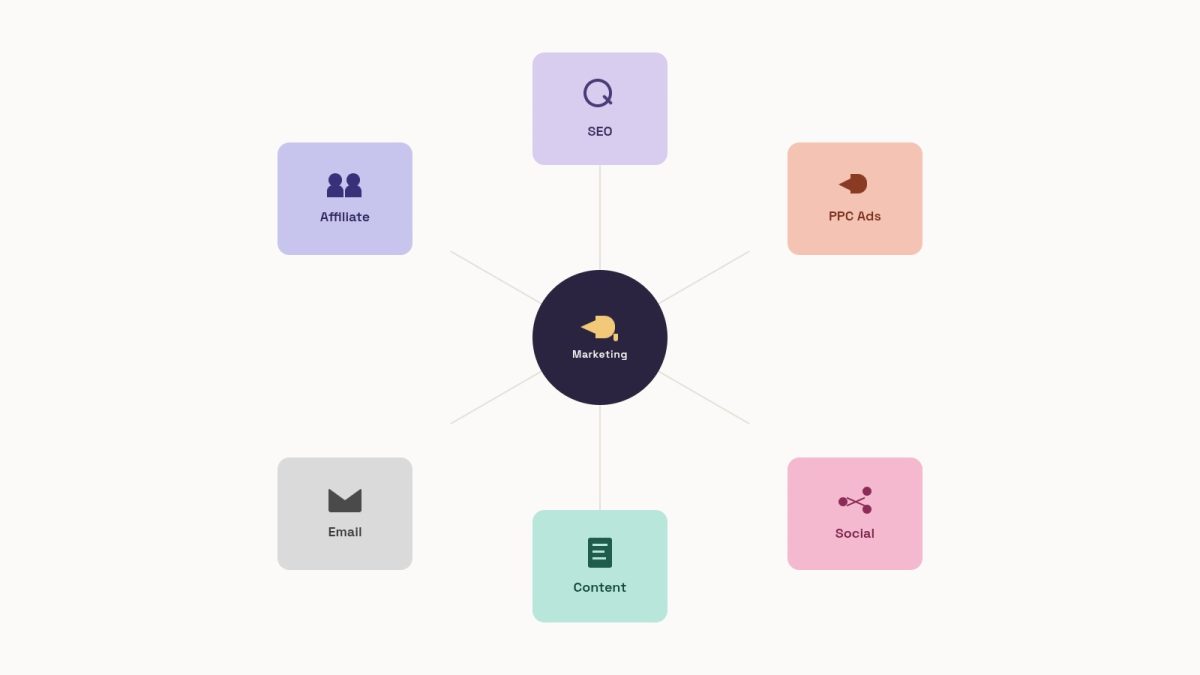
Digital marketing is the practice of promoting products, services, or brands through digital channels — including search engines, social media, email, and websites — rather than traditional media like TV, radio, or print. Its key advantage over traditional marketing is measurability: every click, view, and conversion can be tracked, allowing campaigns to be optimized in real time.
Not long ago, marketing meant billboards, TV spots, and cold calls. Today, most of the decisions that lead someone to buy something happen on a screen — a search result, a social media post, an email, a review. Whether you’re a small business owner, a freelancer, or just curious how brands seem to “know” what you want before you do, here’s a practical rundown of how digital marketing works and where to start.
Quick summary: Digital marketing has six core channels — SEO, PPC advertising, social media, content marketing, email marketing, and affiliate/influencer marketing — supported by analytics tools that measure performance. Most businesses succeed by focusing on 2–3 channels rather than trying to use all of them at once.
What Is Digital Marketing?
Digital marketing is the practice of promoting products, services, or brands using digital channels — search engines, social media, email, websites, and apps — instead of (or alongside) traditional media like print, TV, or radio.
The big advantage over traditional marketing is measurability. You can see exactly how many people saw an ad, clicked it, and bought something. That data lets you improve campaigns in real time instead of guessing.
The Main Channels of Digital Marketing
Digital marketing is built from six core channels. Each works independently but performs best when combined with the others.
Search Engine Optimization (SEO)
SEO is the practice of improving your website so it ranks higher in search engine results for relevant queries. Good SEO combines quality content, technical site health, and credible backlinks. It’s slower to show results than paid ads, but the traffic it brings is often more sustainable and cost-effective long-term.
Pay-Per-Click Advertising (PPC)
PPC lets you pay to appear at the top of search results or on other websites, and you’re only charged when someone clicks. Google Ads and Microsoft Advertising are the two biggest platforms. It’s a fast way to get visibility while your SEO efforts build up in the background.
Social Media Marketing
This covers both organic posting (building a following and engaging with it) and paid social ads on platforms like Instagram, TikTok, Facebook, and LinkedIn. Different platforms suit different audiences and goals — LinkedIn for B2B, TikTok and Instagram for younger consumer audiences, for example.
Content Marketing
Content marketing means creating valuable material — blog posts, videos, guides, infographics — that attracts and retains an audience without directly selling to them. It builds trust and authority, and it feeds both SEO and social media efforts.
Email Marketing
Despite being one of the oldest digital channels, email remains one of the highest-ROI tactics available. It’s a direct line to people who’ve already shown interest in your brand, useful for nurturing leads, announcing promotions, and retaining existing customers.
Affiliate and Influencer Marketing
Here, businesses partner with other websites, creators, or influencers who promote products in exchange for a commission or fee. It borrows the trust an audience already has in a creator and extends it to your brand.
Marketing Analytics
Marketing analytics is the use of tools like Google Analytics, Meta Ads Manager, and CRM platforms to track how campaigns perform — including traffic sources, conversion rates, and customer acquisition cost. Analytics is what turns digital marketing from guesswork into a repeatable, improvable process.
Digital Marketing Channels at a Glance
| Channel | What It Does | Best For | Speed of Results |
|---|---|---|---|
| SEO | Improves organic search ranking | Long-term, sustainable traffic | Slow (months) |
| PPC | Paid placement in search/websites | Fast visibility | Immediate |
| Social Media | Builds audience and engagement | Brand awareness, community | Medium |
| Content Marketing | Creates valuable, non-salesy material | Trust and authority building | Slow–Medium |
| Email Marketing | Direct communication with interested leads | Retention, nurturing, promotions | Fast |
| Affiliate/Influencer | Partners with creators for promotion | Borrowed trust, reach | Medium |
Building a Simple Digital Marketing Strategy
You don’t need to master every channel at once. A workable approach looks like this:
- Define your goal. More website traffic? More leads? More direct sales? Your goal shapes which channels matter most.
- Know your audience. Where do they spend time online? What problems are they trying to solve? This determines which platforms and messaging will resonate.
- Pick 2–3 channels to start. Trying to do everything at once usually means doing nothing well. A small business might start with local SEO, a Google Business Profile, and Instagram.
- Create a consistent content plan. Whether it’s blog posts, social captions, or email newsletters, consistency builds trust and keeps you visible.
- Track and adjust. Use analytics to see what’s actually working, then double down on it and cut what isn’t.
Frequently Asked Questions
What is the difference between SEO and PPC? SEO earns free (“organic”) traffic by improving a website’s ranking in search results over time, while PPC (pay-per-click) buys immediate visibility by paying each time someone clicks an ad. SEO is slower but more cost-effective long-term; PPC delivers faster but ongoing-cost results.
Which digital marketing channel has the best ROI? Email marketing is widely regarded as one of the highest-ROI digital channels because it reaches people who have already opted in and shown interest, making conversions more likely than cold outreach.
How many digital marketing channels should a small business use? Most small businesses succeed by focusing on 2–3 channels rather than spreading effort across all of them. A common starting combination is local SEO, a Google Business Profile listing, and one social media platform matched to their audience.
Is content marketing the same as social media marketing? No. Content marketing refers to creating valuable material such as blog posts, videos, or guides, while social media marketing is the distribution and engagement layer — often used to promote that same content to a wider audience.
Do I need a big budget to start digital marketing? No. Channels like SEO, organic social media, and email marketing require more time investment than money, making them accessible starting points before adding paid channels like PPC or influencer partnerships.
Common Mistakes to Avoid
- Chasing every new platform. Being everywhere with weak effort usually performs worse than being consistent on two channels.
- Ignoring mobile experience. The majority of web traffic is mobile — a slow or clunky mobile site quietly kills conversions.
- Treating SEO and content as “set and forget.” Search algorithms and audience interests change; content needs regular updates to stay relevant.
- Not tracking ROI. Spending on ads or content without measuring outcomes makes it impossible to know what’s actually working.
- Overlooking existing customers. It’s usually cheaper to retain and upsell current customers than to constantly chase new ones — email and loyalty programs matter here.
The Bottom Line
Digital marketing isn’t one skill — it’s a collection of channels that work best together. SEO and content build long-term visibility, paid ads offer quick wins, social media builds relationships, and email keeps the conversation going after the first sale. Start small, measure what works, and expand from there. The businesses that win online usually aren’t the ones spending the most — they’re the ones paying the closest attention to what their data is telling them.
Join the discussion